
Haverford Township Previous Residents Sources
A backward address trail begins in the current parcel record and then changes sources as the time period moves back. Delaware County's Recorder preserves real-property records from the County's 1789 founding, while online copies are described as 1799-present. That is the longest formal ownership route. It still does not identify every past resident. For occupancy, use dated Chamber directories, census material, and other separately sourced historical records. For older administrative or probate material, the County Archives is the backstop, although it does not hold Recorder deeds.
| Source | Years It Covers | Where Held | What It Shows |
|---|---|---|---|
| Delaware County land-record series | 1789 forward; online copies 1799-present | Recorder of Deeds and public portals | Recorded transfer parties, dates, legal descriptions, plans, and mortgages or releases. |
| Legacy and Cloud recorder indexes | Legacy indexes and images since 1799; Cloud historic index bands include 1800-1981 | CountyFusion and GovOS Cloud Search | Book and page leads, grantor and grantee entries, and historic indexed material. |
| County property and tax system | Current online system; no historic cutoff published | Delaware County Real Estate/Tax System | Current parcel, Parcel ID, situs and mailing fields, map, last sale, and deed cue. |
| Federal census | Released on the 72-year schedule; latest released decennial census is 1950 | Federal census publications and library research tools | Household snapshot and enumeration-district context, paired with address evidence. |
| Township permit and code material | No online beginning year located | Haverford Township Building and Codes | Dates of construction, repair, alteration, or an address-specific application trail. |
| County Archives | Most administrative-office records 1789-1950 | Delaware County Archives | Historical administrative, assessment, probate, and court-index backstop. |
The current record starts the chain. The historical source selected after that depends on whether the question is ownership, occupancy, a structure change, or a family event.
Haverford Township Previous Residents Start With a Parcel
Use the Delaware County property address search before working backwards. Its address form accepts an optional Number and Street, with the instruction to enter the street name without its suffix. A street-only search returns street occurrences, partial text can retrieve matching strings, and an asterisk is a wildcard. A result can expose the Parcel ID, TaxMap ID, property address, owner display, sales date and amount, land-use description, map, legal-description text, municipality, and current mailing fields. The County removed name searching from this route to preserve privacy, so the address is the practical starting key.
Insider tip: Save the Parcel ID before opening the deed index. The Recorder specifically directs users to obtain that identifier in the tax system, making it the clean bridge from a street address to recorded land documents.
A situs address is the physical parcel location. A mailing address is where tax correspondence goes and may be elsewhere. A legal description identifies the land interest and may not resemble the everyday street address. Keep all three in the research log.
Haverford Township Previous Residents Recorder Access
The Recorder offers two public online routes: CountyFusion Online Records and GovOS Cloud Search. CountyFusion is the legacy service; Cloud Search soft-launched on February 1, 2024 and added another County search route, online certified copies, and Property Alert. The online-copy statement is 1799-present, whereas the office's underlying real-property custody reaches back to 1789. Keep that distinction in notes because a physical holding and an online image range are not the same promise of searchable coverage.
The GovOS Cloud Search is the manifest source for the Recorder's current alternative search interface.
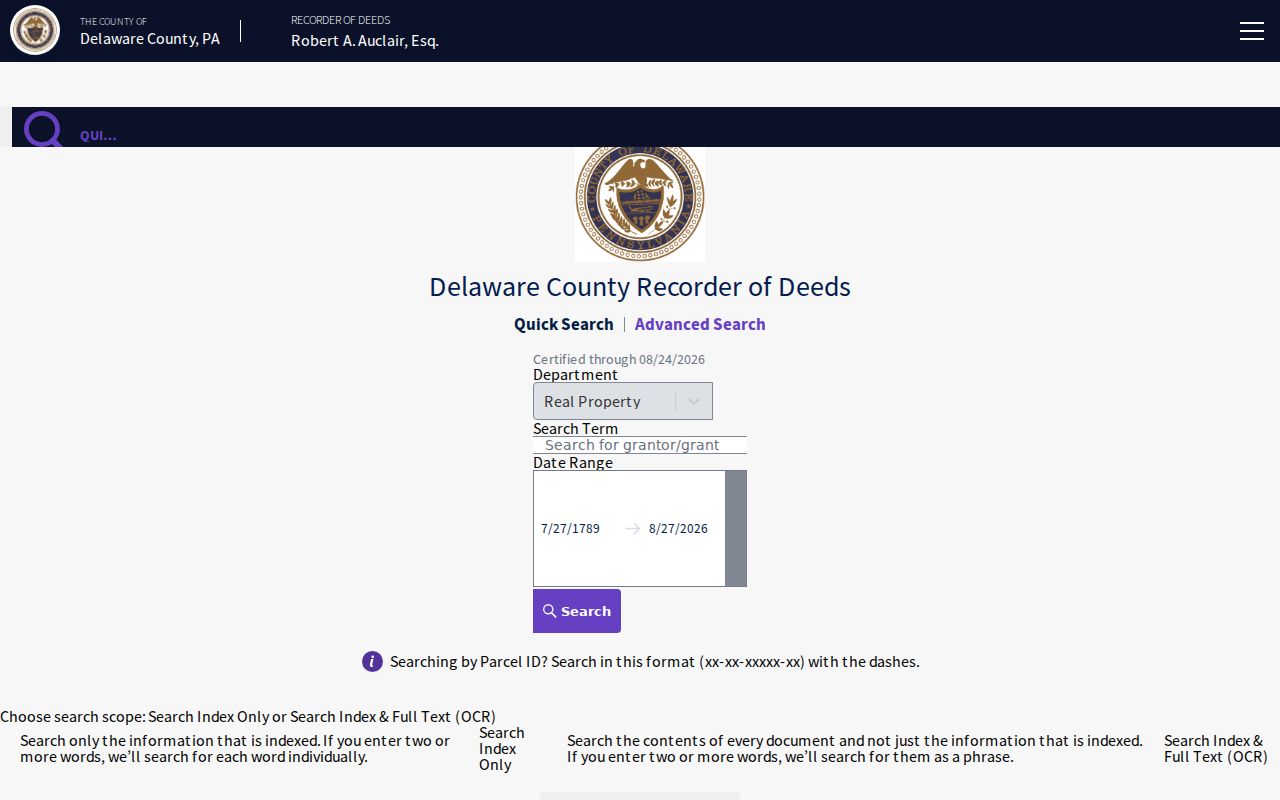
Cloud Search can supply a recorded-document lead, but a recorded owner or party should not be described as every person who lived at the address.
Property Alert can notify a present owner when a document is recorded using a Property ID. It is a monitoring tool for future recordings, not a way to reconstruct past residents or a guarantee against fraud.
Tracing Haverford Township Past Owners
The County Heritage Commission's house-history sequence uses the recorded deed as a backward chain. Start with the assessor and map parcel, record the current owner and most recent book and page cue, then search that book and page in the Recorder. Each deed can contain a prior-deed recital or a “being the same premises” reference. Search the seller as grantee to locate the preceding acquisition, or follow the cited book and page. Preserve name variants, corporate or trust names, dates, and leading zeroes in old book labels.
- Run the exact address in the property system and save Parcel ID, TaxMap ID, current situs and mailing fields, owner display, and last book or page cue.
- Open the parcel map and record the legal description and any plan or subdivision reference.
- Retrieve the current deed and record its grantor, grantee, recording date, instrument date, and earlier-deed recital.
- Search the named seller as a grantee for the acquisition that came before, or use the cited book and page.
- Repeat the sequence, retaining variants and moving to Recorder microfiche or a visit when an older deed is not convenient online.
- Grantor
- The party conveying an interest in a recorded document.
- Grantee
- The party receiving that recorded interest; searching a seller as grantee can uncover an earlier purchase.
- Chain of title
- The linked sequence of recorded transfers for a parcel or land interest.
- Legal description
- The parcel language in a recorded or assessment record that can remain useful when a street label changes.
The CountyFusion Online Records interface is another Recorder route shown in the manifest.
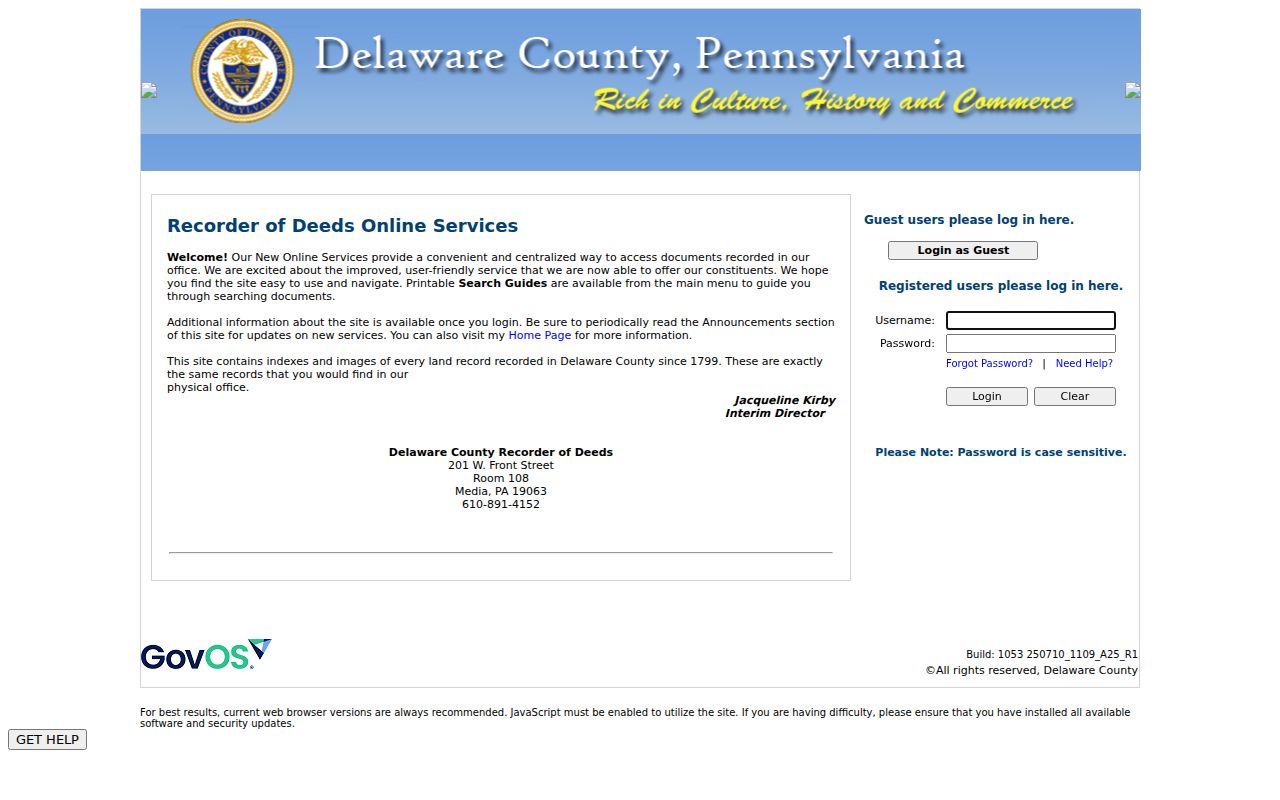
A recorder index supports a history of recorded land interests. It is not a professional title opinion, and the Recorder does not perform title searches or give legal advice.
Haverford Township Previous Residents and Occupancy
Ownership is only half of a past-residents question. Once the deed chain reaches a date interval, check the historical directory and census layer for occupancy. The Historical Society preserves Chamber directories for 1934, 1935, 1936-37, 1938, 1939, 1940, and 1942, plus the League of Women Voters' 1962 This Is Haverford Township. A directory can provide a published name, business or occupation wording, and street or locality context for its edition. The current latest released federal census is 1950 and supplies a household snapshot that should be read for Haverford Township and the relevant enumeration district, not only the word Havertown.
Use a simple occupancy flow: address and date interval, then surviving directory edition, then closest released census, then a separate deed, probate, obituary, or newspaper source to explain a move, death, or name change. The local collection years and how to read them are detailed in the City Directories page. A published entry is a dated lead, not proof that every occupant was listed.
Haverford Township Previous Residents Map Checks
Map evidence can test the address itself before a household conclusion is made. County and Historical Society holdings include 1870 and 1875 county atlases, 1909 and 1913 county atlas coverage, a 1947 Main Line property atlas, a 1961 Main Line atlas, Sanborn material, and other dated local mapping. A map can show whether a dwelling, lot boundary, road alignment, or development name existed around the time a person appears in a directory. It cannot name every occupant.
The County Historic Maps page is the manifest source for historic maps, Sanborn material, and aerial-resource information.
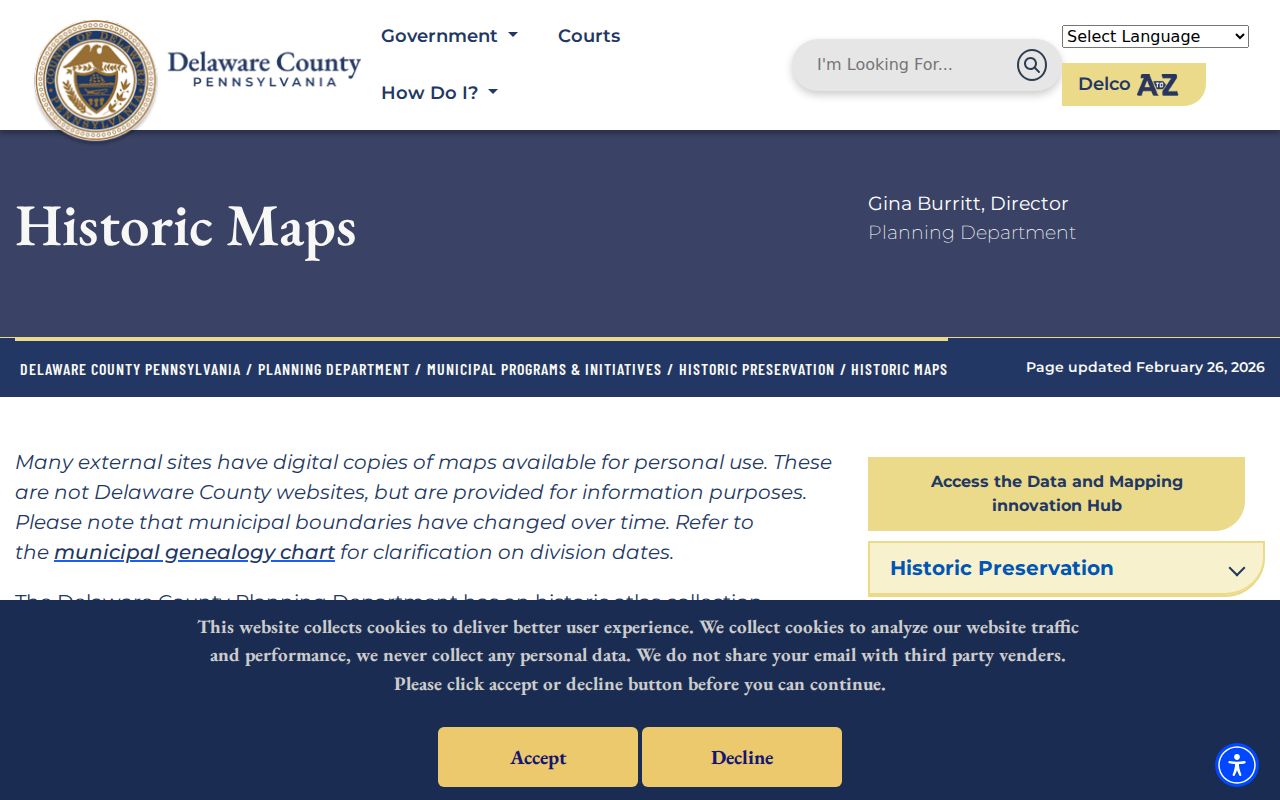
A dated map is most valuable when it checks a potentially renumbered, copied-forward, or newly developed address against the period record.
Haverford Township Previous Residents Place Names
Older records may not use the mailing label a searcher expects. Havertown began as a postal-delivery name in 1946. Earlier material can use Upper Darby, Llanerch, Brookline, Haverford, Manoa, or another post-office label for the same broad area. Search the historic locality with the street name and preserve the original wording in the log. Also distinguish Haverford Township from Haverford Borough and Haverford College, which are not interchangeable records targets.
Myth: A modern ZIP or Havertown label is not enough to reject an older address result. The relevant record may be filed under a Main Line, Delaware County, historic post-office, or neighborhood vocabulary.
The Historical Society's place-name explanation documents this local caution.
Haverford Township Previous Residents Archives
For a period beyond the online deed interface, Delaware County Archives provides a real in-person and mail research channel. It holds most county administrative-office material from 1789-1950, excluding Recorder records. Its published indexes include administrations from 1790-1950, historic assessments across 1791-1903 runs, naturalizations from 1795-1990, estate cases from 1789-1950, wills from 1789-1945, and veteran grave registrations from 1775-2010. These can supply a family or estate context beside an address trail, but they do not replace the Recorder for land documents.
The Haverford Township Free Library Local History Room is another support route for local-history material. It was completed in May 2025, is noncirculating, and is used with Reference Desk assistance.
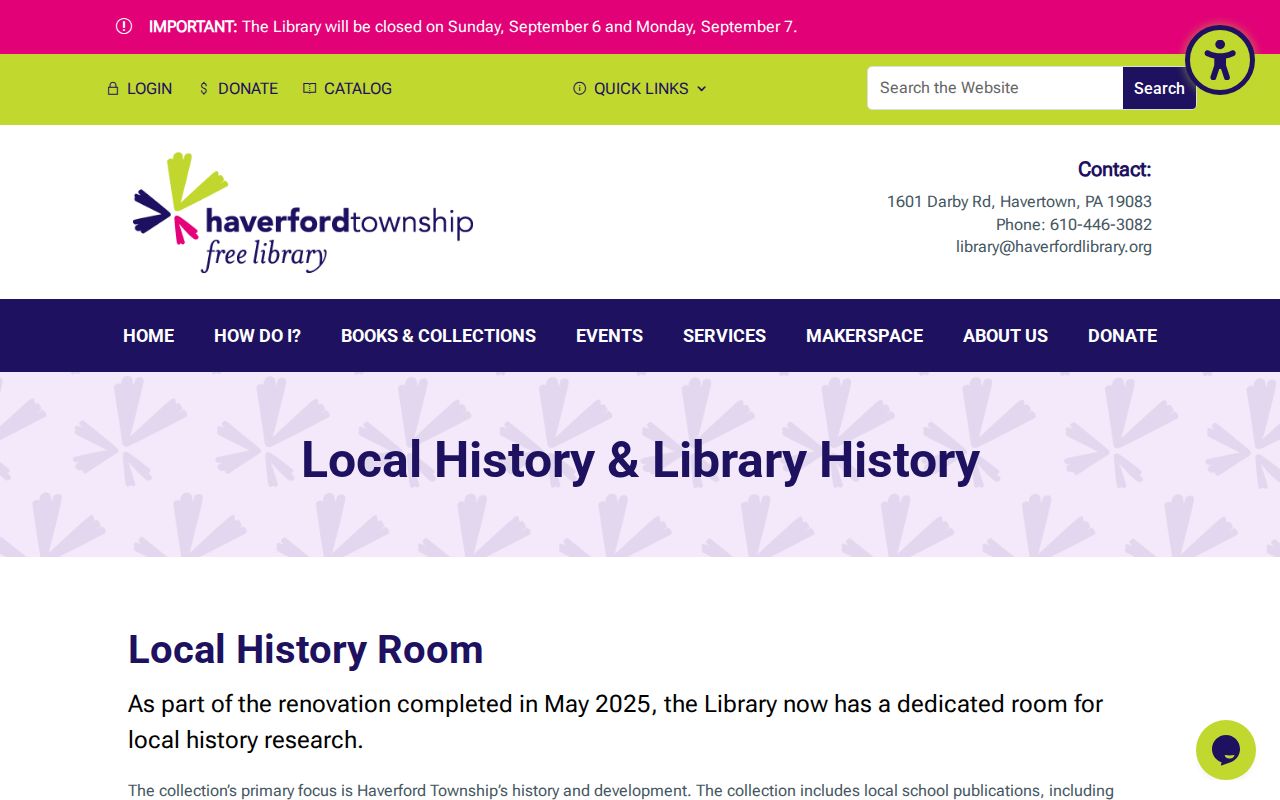
The Library helps bridge an address into school publications, yearbooks, and local-history resources when a Recorder index alone cannot answer an occupancy question.
Insider tip: The Archives reading room is in Lima at 340 N. Middletown Road, Building 19, open weekdays from 9 a.m. to 4 p.m. Staff retrieve documents; researchers register, use pencils, and may photograph when copying is unsafe without flash. Mail orders have a $10 minimum for one to ten pages, then $1 per additional page, and the Archives does not accept credit cards.
Haverford Township Previous Residents Limits
Past-residents research should stay tied to house history, family history, estate or heir questions, and other lawful personal research. Recorded deeds identify parties to a land transaction, not a complete household. Directories reflect what their publisher captured in a particular edition. Census material is a dated household snapshot. Permit and code files may document work at a property, but the Township's online known-permit route requires a selected address and Reference Id and is not a public historical roster.
Lawful use. Pennsylvania protects confidential and restricted information. Do not use address research to stalk, harass, monitor, or harm anyone, and do not treat protected, redacted, or absent records as an invitation to bypass the restriction.
The state addresses harassment in 18 Pa.C.S. § 2709 and stalking in § 2709.1. A careful house history records the source, date, and limitation of each finding rather than turning a historical lead into a claim about a living person.